
The main downsides of NAD+ IV therapy in Mission Hills are side effects during the drip, such as chest pressure, nausea and cramping, plus long sessions and a cost paid before any benefit is proven. NAD+ is on the FDA’s list of compounding substances still under evaluation, and the FDA has warned about contamination risk in IV NAD+ made from food-grade material. People with kidney disease, heart failure, bleeding disorders or a pregnancy should check with a clinician first.
Last Updated: October 20, 2026
Table of Contents
- Most NAD+ Side Effects Show Up While the Drip Is Running
- The Time and Cost Add Up Before Any Benefit Is Proven
- Some Mission Hills Patients Should Skip NAD+ or Check First
- Long-Term Safety and Product Quality Are Still Open Questions
- Deciding Whether NAD+ Fits You in Mission Hills
- Frequently Asked Questions
Care is provided under physician supervision. Information on this page is general and is not medical advice. Individual results vary.
Wellness clinics increasingly offer NAD+, a coenzyme your cells use for energy, by IV even though its safety and effectiveness have had limited evaluation. The downsides are mostly about how the drip feels, how long it takes, what it costs and what is still unknown.
Most reported NAD+ IV side effects happen during the infusion, and in one small study they stopped once it ended. Some people should skip NAD+ or talk to a clinician first, and the product itself is not FDA approved.
At SDBody, we offer NAD+ under clinician supervision and treat IV therapy as a supportive comfort service, not a treatment for a medical condition. This guide covers the downsides honestly so you can decide before you book.
Most NAD+ Side Effects Show Up While the Drip Is Running
NAD+ side effects mostly appear during the infusion itself, especially when the drip runs too fast. Clinicians and patients commonly report nausea, sweating, stomach cramping, headache and a general unwell feeling, and in one small study the symptoms stopped once the infusion was finished.
Chest Pressure and Tightness
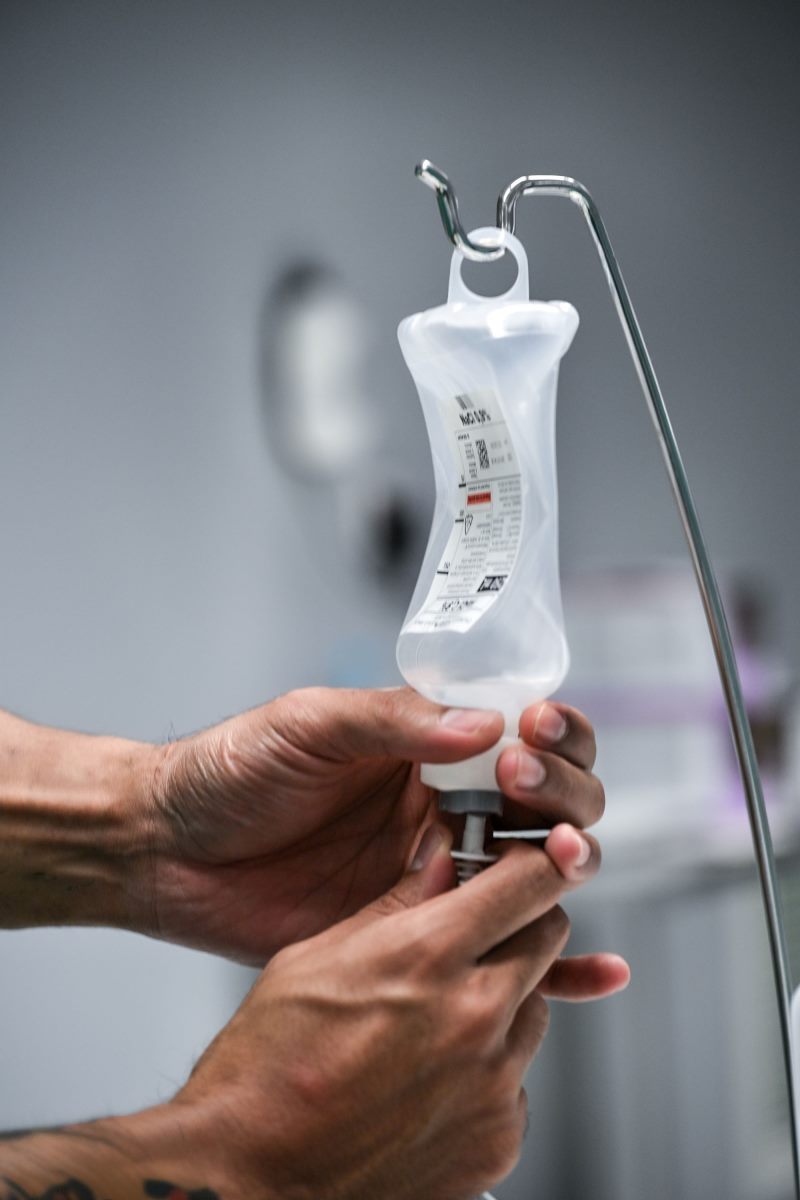
Chest pressure or tightness is commonly reported when an NAD+ drip runs quickly. Chest pressure is one reason NAD+ runs more slowly than a standard vitamin drip.
For NAD+ infusions in Mission Hills, our staff set the drip speed to what you tolerate and remain with you for the whole session. If you feel pressure, say something right away. Our staff can slow the drip, which may ease it, and in a 2026 study symptoms stopped once the infusion ended.
Nausea and Stomach Cramping
Nausea and stomach cramping are among the most common complaints. In a small 2026 retrospective study in the journal Frontiers in Aging, people given 500 mg of NAD+ by IV reported cramping, nausea and other stomach symptoms during the infusion.
That study was small, retrospective and run by a wellness company whose staff wrote it. Its useful finding is that the symptoms were tied to the infusion and stopped when it ended.
Flushing, Warmth and a Faster Heartbeat
We list warmth and flushing among the sensations linked to a drip that runs too fast, and the same small study reported a faster heart rate during infusions. These sensations can feel alarming the first time, even when they pass.
Telling staff early matters more than pushing through. Slowing the rate is the first step our staff take.
Soreness or Irritation at the IV Site
Any IV, including NAD+, is a medical procedure with real risks. We list vein irritation, infiltration (fluid leaking into the tissue around the vein), allergic reaction and infection at the IV site among them.
A clinician reviewing your health information first, and supervision during the drip, are how we manage those risks.
| Factor | Effect | What Helps |
|---|---|---|
| Infusion rate | A fast drip is linked to chest tightness, nausea, flushing and cramping | A slow rate adjusted to your tolerance |
| First infusion | You do not yet know how your body responds | Starting with the gentler 250 mg dose |
| Product source | Food-grade NAD+ carries a high contamination risk | Asking where the clinic’s NAD+ is compounded |
| Speaking up | Staff can slow the drip only once they know | Telling staff the moment you feel something |
The Time and Cost Add Up Before Any Benefit Is Proven
NAD+ infusions take considerably longer than a standard drip because the rate must stay slow for comfort. You pay that time and money up front, while a 2026 systematic review in Ageing Research Reviews identified no outcome trials of IV NAD+ for anti-aging or wellness goals.
In one small study, people slowed their own drips because of symptoms, and infusions averaged about 97 minutes. A small 2019 pilot in Frontiers in Aging Neuroscience saw no adverse events from a very slow, six-hour infusion.
Our NAD+ IV therapy menu listed $250 for 250 mg and $400 for 500 mg in October 2026, and we confirm pricing and timing at booking. After months of exhaustion, our diagnostic labs in Mission Hills answer more than a drip, as our post on when normal labs still feel off explains.
Some Mission Hills Patients Should Skip NAD+ or Check First
Some people should not book an NAD+ drip without a clinician’s review. Before booking, we ask you to tell us about kidney disease, heart failure, past fluid overload, a bleeding disorder, pregnancy or breastfeeding, and any medications that interact with high-dose vitamins.
Kidney, Heart or Fluid-Balance Conditions
An IV adds fluid to your circulation, so kidney disease, heart failure or a history of fluid overload all need a clinician’s review first. These are on our own screening list for every NAD+ booking.
Ask your doctor whether this applies to you if you manage any of these conditions. A short conversation before booking is far easier than stopping a session halfway.
Pregnancy and Breastfeeding
The two small human NAD+ infusion studies we reviewed did not include pregnant people: one enrolled only men aged 30 to 55, and the other excluded pregnancy.
Those studies offer no pregnancy data, so pregnancy and breastfeeding are reasons to talk to us before booking. Our guide to whether IV therapy is worth it covers who drips tend to suit.
Bleeding Disorders and Medications
A bleeding disorder, or medications that interact with high-dose vitamins, belong on the table before any infusion is set up. A clinician reviews your health information, contraindications and candidacy first.
Bring a current list of medications and supplements. Our guide to what happens at your first visit shows how that review fits into intake.
Long-Term Safety and Product Quality Are Still Open Questions
Long-term human safety data on raising NAD+ remain limited, and human research on NAD+ is still early. NAD+ is on the FDA’s list of compounding substances still under evaluation, and compounded drugs are not checked by the FDA for safety, effectiveness or quality before they are sold.
In October 2024, the FDA warned that some compounders made IV products from food-grade NAD+, which carries a high risk of microbial and endotoxin contamination. The FDA has received reports of severe chills, shaking, vomiting and fatigue after NAD+ injections, and a January 2026 warning letter describes three patients sent to the emergency room after doses from one lot; an unopened vial from it held excess endotoxins.
A 2020 review in Experimental Gerontology lists possible, unproven risks of raising NAD+ levels, so ask any clinic where its NAD+ comes from.
Deciding Whether NAD+ Fits You in Mission Hills
The downsides of NAD+ are real, and most of them are easier to manage when a clinician screens you first and stays with you while the drip runs. At SDBody, we review your history and medications before any infusion and set the rate to your tolerance.
Your first visit starts with a screening conversation at our Mission Hills clinic on Hancock Street, before anything is set up. Call us today to ask whether NAD+ suits you, or request a consultation online and our team will follow up.
Frequently Asked Questions
Why is a NAD IV so uncomfortable?
An NAD+ IV often feels uncomfortable because the drip rate matters: a quick rate is commonly linked to chest tightness, nausea, flushing and cramping. Slowing the rate may ease those sensations, which is why NAD+ is given slowly and why staff adjust it to your tolerance.
Who should not do NAD IV?
People with kidney disease, heart failure, past fluid overload or a bleeding disorder, and anyone pregnant, breastfeeding or on a medication that interacts with high-dose vitamins, should not book an NAD+ IV without a clinician’s review first. Some people should skip it altogether after that review.
Why do I feel weird after taking NAD?
Most unusual sensations, such as warmth, nausea or chest pressure, happen during the infusion and are linked to the drip rate. In one small study, symptoms stopped when the infusion finished. If you still feel unwell afterward, tell the clinic so a clinician can check it.
If you have chest pain, trouble breathing, fainting, or severe chills and shaking after you leave, call 911 or go to the nearest emergency room.
What is the controversy with NAD+?
The controversy is that NAD+ is widely sold while its safety and effectiveness have had limited evaluation. NAD+ is on the FDA’s list of compounding substances still under evaluation, outcome trials of IV NAD+ for wellness goals are missing, and the FDA has warned about contaminated IV products. Our post on what the evidence shows on NAD+ therapy goes further.
How do you feel after NAD IV?
In one small study, symptoms stopped once the infusion finished, so how you feel during the drip is usually the main issue. There is no set recovery period after an infusion, so most people return to their day, but tell staff about any reaction before you leave.
Can you take NAD+ daily?
Long-term daily use has not been well studied. Oral NAD+ precursors have generally been well tolerated over weeks to months in trials, and supplements are not FDA approved before they are sold. Ask your doctor before starting any daily NAD+ product.