
Red light therapy in La Jolla has its best research support for specific skin and hair uses, and weaker support for recovery and sleep. In a 2024 Mayo Clinic Minute, a Mayo Clinic dermatologist said red light can sometimes help acne and sun-related skin aging. She advised seeing a dermatologist before buying a home mask. FDA clearance covers one stated use, so the evidence for your concern matters more than the label.
Last Updated: November 23, 2026
Table of Contents
Care is provided under physician supervision. Information on this page is general and is not medical advice. Individual results vary.
Spas and home face masks all sell red light now, with promises that run from smoother skin to better sleep. Most people want a trusted medical source to say whether it works.
It depends on the use. Skin and hair have the most studies, cancer care has a narrow formal guideline, and recovery and sleep are still unsettled.
At SDBody, we offer red light therapy at our Fay Ave clinic in La Jolla as a wellness and recovery service. We do not offer it as treatment for any diagnosed condition, and this guide reads Mayo Clinic’s statement against the primary research.
What Is Mayo Clinic Actually Saying About Red Light Therapy?
The Mayo Clinic statement we could verify is a 2024 Mayo Clinic Minute with dermatologist Dr. Dawn Davis. She said concentrated visible light can have some benefit for the skin. She named acne and photoaging as uses, and cautioned against buying home devices without advice.
Some Benefit for Skin, in a Dermatology Setting
In the April 2024 segment, Dr. Davis said dermatology research has found that some visible light colors can offer the skin some benefit. That applies once the light is concentrated and intensified.
She added that red light can sometimes be used to treat acne and photoaging, which is skin aging from years of sun exposure. Both “some” and “sometimes” matter here, because a 2016 Cochrane review found high-quality evidence on acne light therapy lacking.
A Warning About Home Masks and Wands
Dr. Davis also said over-the-counter masks and wands may not be effective or safe. She suggested talking to a dermatologist before you spend money on one.
Stanford Medicine adds, in a 2025 article, that red light delivered in a clinic will almost always be more powerful than any at-home device. A home mask and a clinic session have different research behind them, so findings on one do not automatically apply to the other.
What the Statement Leaves Out
A short news segment is not built to grade studies. It does not say how strong the evidence is or who paid for the research.
Those details matter, because light treatments differ widely in wavelength and dose. The segment also covers skin only, so it says nothing either way about recovery or sleep.
So Does Red Light Therapy Work for La Jolla Patients?
Whether red light therapy works depends on the use. Research is strongest for specific skin and hair uses, narrow in cancer care, and mixed or weak for recovery and sleep. Each use has its own evidence, so a strong result for one concern says little about another.
Skin Uses Have the Most Studies
A 2016 Cochrane review of 71 acne studies with 4,211 people rated red light photodynamic therapy as low certainty. That version pairs red light with a light-sensitizing cream, so it differs from a plain red light session.
About two thirds of those studies were industry-sponsored. The American Academy of Dermatology says red light is usually a complementary therapy, used within a plan built on standard treatment.
Thinning Hair Shows Measurable but Limited Gains
For pattern hair loss, a 2021 meta-analysis in the Annals of Dermatology pooled seven double-blind randomized trials. Home-use low-level light devices increased hair density compared with sham devices, and the authors called the therapy potentially effective.
The gains have limits. The American Academy of Dermatology says light therapy will not regrow a full head of hair. A Stanford Medicine dermatologist notes the effect stops when treatment stops, so ask your doctor about other options.
Cancer Care Has the Clearest Guideline
The clearest guideline-level use of photobiomodulation, the medical name for red light therapy, is in cancer care. In 2019, MASCC/ISOO guidelines recommended specific protocols to help prevent oral mucositis in some patients, such as those having head and neck radiotherapy.
The same guidelines find too little evidence to treat mucositis once it has developed, and require exact protocol settings. This care sits outside our wellness service, but it shows how specific and dose-bound the strongest evidence is.
Recovery and Sleep Are Less Settled
On exercise recovery, a 2019 paper in the Brazilian Journal of Physical Therapy reports that meta-analyses rate the evidence as low to moderate quality. Its recommendations cover young, healthy adults only, and its lead author declares research support from a device manufacturer.
In a 2025 article, experts at Stanford Medicine said the data for athletic performance and sleep is lacking. We rate recovery as reasonable but mixed, and sleep and mood as weak.
Our red light therapy service overview covers sessions at both our Mission Hills and La Jolla clinics. Our post on what PEMF actually does and our La Jolla infrared sauna and cold plunge page cover other recovery services.
Is Red Light Therapy FDA Approved or FDA Cleared?
According to the American Academy of Dermatology, the FDA clears red light therapy devices instead of approving or certifying them. Clearance means the agency found a device substantially equivalent to one already legally on the market. The AAD says “FDA approved” and “FDA certified” have no meaning on a medical device.
Each clearance is tied to a stated use. Product code OHS covers over-the-counter wrinkle reduction, and OLP covers home red and blue light devices for mild to moderate acne. OAP covers laser combs for male pattern hair loss.
Clearance alone does not show a device will work for your concern, so ask what it was cleared for. Our guides to what hyperbaric oxygen therapy can do and the evidence on NAD+ therapy read other treatments the same way.
What About Wavelength and Our Six-Output Bed?
Wavelength affects how deep light travels. A 2013 review of light therapy for skin, published in Seminars in Cutaneous Medicine and Surgery, explains that longer wavelengths penetrate further. So red light acts closer to the surface, while near-infrared light can reach deeper tissue beneath the skin.
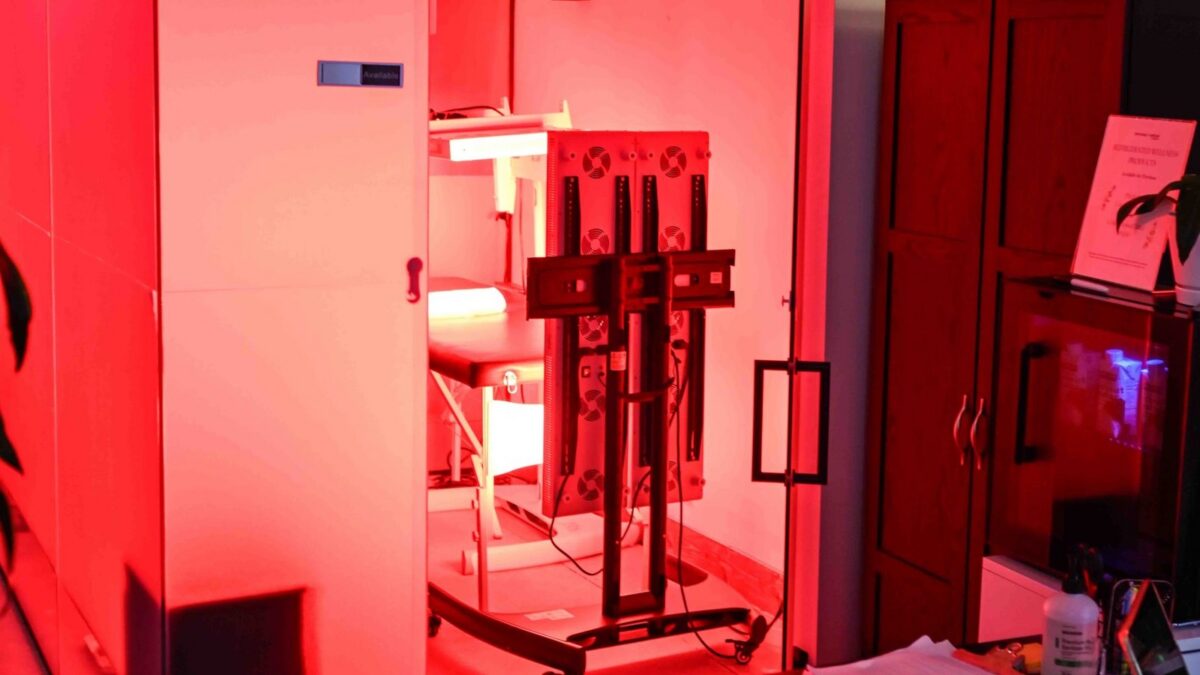
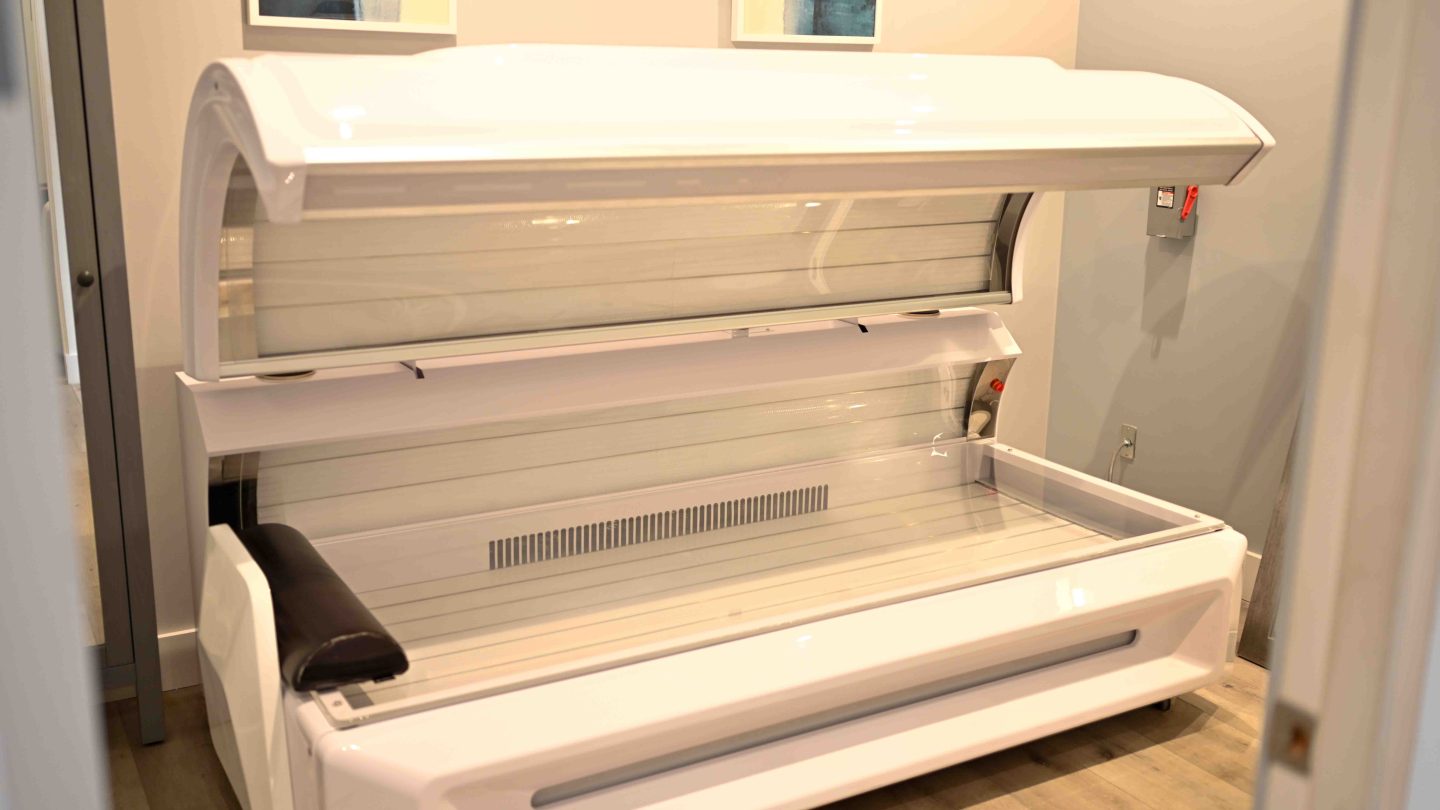
Our La Jolla clinic has a higher-end bed with six light outputs delivering different wavelengths, designed so light can reach several depths. You wear eye protection, and our La Jolla red light therapy page covers what a session involves.
Tell us first if you have a light-sensitive condition such as lupus, take a light-sensitizing medication, or are pregnant. Our what happens at your first visit guide explains how a clinician reviews your history. If you feel faint, have chest pain or have trouble breathing during or after a session, call 911.
Deciding Whether Red Light Therapy Fits You in La Jolla
Red light therapy has real but narrow evidence, strongest for some skin and hair uses and weakest for sleep and mood. At SDBody, we offer it as a wellness and recovery service and tell you plainly what the research does and does not support.
Bring any home device or past treatment details to your visit, so we can look at them alongside your history. Our La Jolla team answers questions about red light sessions at (858) 401-2383, or you can book a La Jolla consultation online.
Frequently Asked Questions
Is red light therapy real or a gimmick?
Red light therapy is real for specific uses and oversold for many others. The evidence is strongest for certain FDA-cleared skin uses and mixed for muscle recovery and soreness. It is weak or preliminary for sleep and mood, so be wary of any device or clinic that promises results for everything.
What does Mayo Clinic say about red light therapy in La Jolla?
In a 2024 Mayo Clinic Minute, dermatologist Dr. Dawn Davis said certain light colors, when concentrated, can have some benefit for the skin. Acne and photoaging were the two uses she named for red light. Before buying a home mask or wand, she advised talking to a dermatologist about whether it suits you.
What do doctors think about red light therapy?
According to the American Academy of Dermatology, dermatologists typically recommend red light as a complementary therapy within a plan that uses standard treatment. The AAD says red light appears to be safe in the short term. Its long-term effects on skin and hair are not yet known, so ask a dermatologist before relying on it.