
Hyperbaric oxygen therapy has a real place in hospital medicine. It’s also on wellness menus across San Diego now, with promises of faster recovery, sharper focus, even help with getting older.
Some of what hyperbaric oxygen therapy (HBOT) does has strong medical backing. Much of what gets promised doesn’t. This guide separates the two: the medical uses with solid evidence, what research shows about recovery and wellness goals, the real risks, and what a supervised session looks like in La Jolla.
SDBody offers HBOT only at its La Jolla clinic, and its team would rather you know where the evidence stands before you book anything.
Quick Summary
- Hyperbaric oxygen therapy means breathing concentrated oxygen inside a pressurized chamber, which lets your blood carry more dissolved oxygen.
- Its established medical uses are specific conditions, such as decompression sickness and carbon monoxide poisoning, generally treated in hospital-based programs.
- For wellness goals like workout recovery or focus, research is still preliminary, and results vary from person to person.
- Ear pressure injury is the most common side effect, and some lung, ear, and seizure conditions need a clinician’s review first.
- SDBody offers HBOT only in La Jolla, as a screened and supervised wellness and recovery service.
What is hyperbaric oxygen therapy?
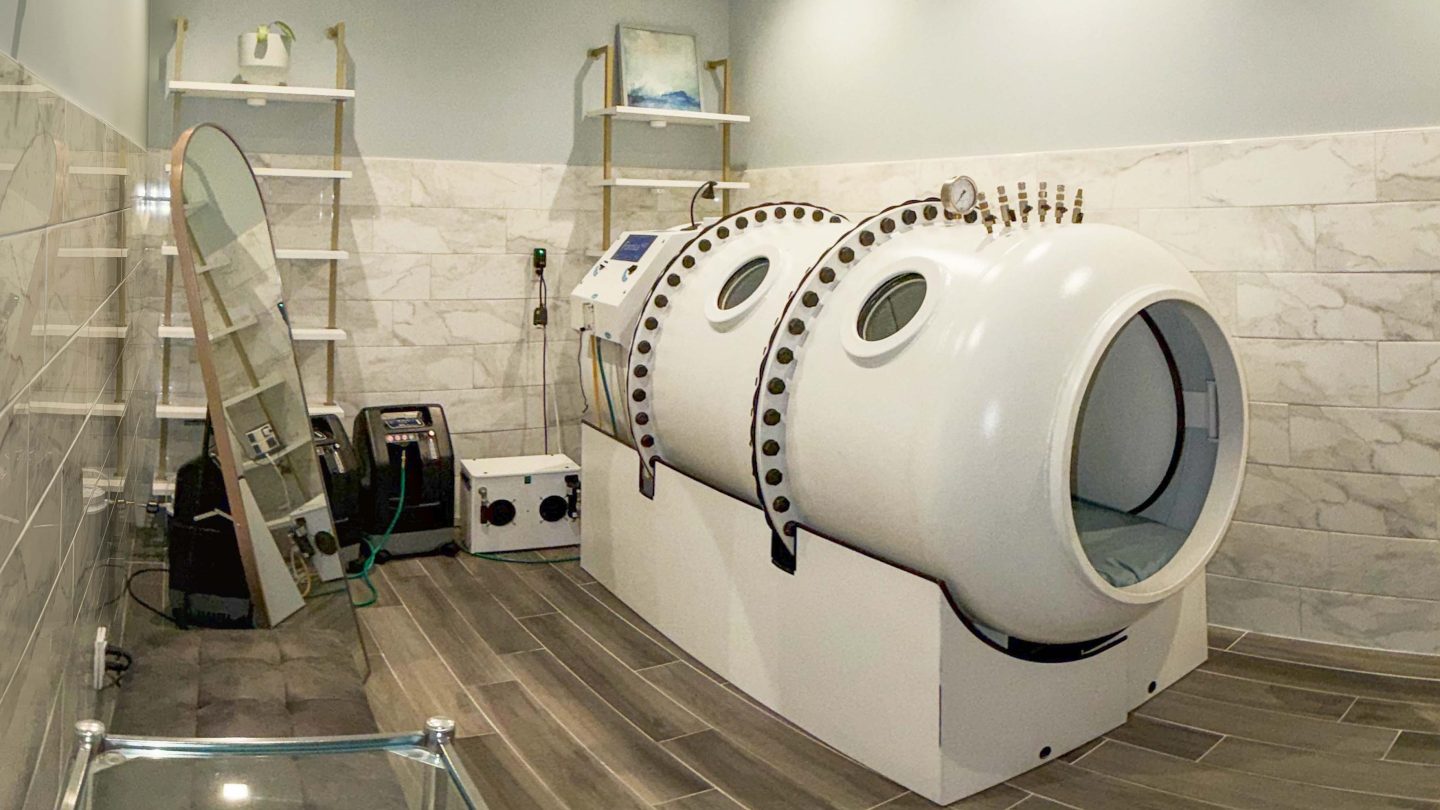
Hyperbaric oxygen therapy is a treatment in which you breathe a high concentration of oxygen inside a chamber pressurized above normal air pressure. The added pressure lets your blood carry more dissolved oxygen than it can at sea level, and it shrinks gas bubbles in the body, which matters for diving injuries. In the U.S., the FDA regulates hyperbaric chambers as medical devices.
For a short list of serious medical conditions, HBOT is an established treatment. For wellness goals, the picture is far less clear.
What hyperbaric oxygen therapy can do: established medical uses
The strongest evidence for HBOT involves a defined set of medical conditions. The Undersea and Hyperbaric Medical Society, the professional society for hyperbaric medicine, publishes the list of approved uses. It includes:
- Decompression sickness, often called “the bends”
- Carbon monoxide poisoning
- Air or gas bubbles blocking blood vessels (air or gas embolism)
- Selected problem wounds that haven’t healed
- Delayed tissue or bone damage from radiation treatment
- Severe anemia
- Crush injuries and other sudden loss of blood flow from trauma
- Serious infections, such as gas gangrene and bone infections that haven’t responded to treatment
- Sudden hearing loss with no known cause
These conditions are generally treated in accredited, hospital-based hyperbaric programs. If you think you might have decompression sickness after a dive, or carbon monoxide poisoning, call 911 or go to the nearest emergency room right away.
SDBody draws a clear line here. The clinic offers HBOT as a wellness and recovery service. It doesn’t offer HBOT as a treatment for anything on that list, and it doesn’t claim HBOT treats conditions outside it. If you’re dealing with a condition on that list, its team can point you to a hospital-based program. The clinic’s page on hyperbaric oxygen therapy in La Jolla lays out that position in full.
What it cannot do: claims that outrun the research
Most HBOT marketing lives outside that list. Research on wellness goals like recovery, focus, and aging is active but preliminary, and none of it is settled.
What studies show about workout recovery
Recovery support is typically why people come to SDBody for HBOT, so here’s what studies have found.
A 2025 review of 10 small randomized trials with 299 total participants found that HBOT sped up recovery on measures of exercise-related muscle damage. The same review didn’t find a clear reduction in muscle soreness.
An earlier Cochrane review found no evidence that HBOT helped muscle soreness after unfamiliar exercise, and some evidence of slightly more pain in the first few days.
The fair read: some signals are worth studying, the trials are small, and results vary from person to person. Chambers also run at different pressures, so results from one setup don’t automatically apply to another. HBOT isn’t a proven shortcut to recovery.
Focus, memory, and aging
Research on HBOT for thinking, memory, and aging is also early. Until larger, well-designed studies answer those questions, promises of sharper focus or slower aging go beyond what the evidence shows.
Is hyperbaric oxygen therapy safe? Risks and screening
HBOT carries real risks, which is why screening and supervision come before any session. Recognized risks include:
- Ear pressure injury (barotrauma), the most common side effect
- Temporary changes in vision
- Oxygen toxicity
- Fire, a real hazard in any oxygen-rich environment
Some conditions rule HBOT out, and others need a clinician’s review first. An untreated collapsed lung (pneumothorax) is a contraindication. Certain lung conditions, recent ear surgery, trouble equalizing ear pressure, uncontrolled seizures, claustrophobia, pregnancy, and some chemotherapy medications all call for a closer look.
In August 2025, the FDA wrote to health care providers after reports of serious injuries and deaths involving HBOT devices, urging facilities to follow the manufacturer’s instructions, train staff, and monitor patients throughout treatment. That’s why you’ll wear cotton clothing and leave lotions, oils, hair products, lighters, and electronics out of the chamber.
What an HBOT session looks like at SDBody La Jolla
Sessions take place at SDBody’s La Jolla clinic on Fay Ave. Here’s how a first session typically goes:
- A member of the clinical team reviews your health history, medications, and past surgeries to check for anything that rules HBOT out.
- You change into cotton, chamber-safe clothing.
- Staff explain the pressure change before it starts, and the chamber pressurizes gradually.
- You’ll likely feel pressure in your ears, a lot like a plane taking off. Swallowing or yawning usually clears it, and staff can slow the rate if it doesn’t.
- Sessions commonly run 60 to 90 minutes, plus time to pressurize and depressurize, and the team stays in contact with you the whole time.
Afterward, most people head straight back to their day, though some feel tired for an hour or two. Your clinician sets the protocol, including session length, around your goals and health. You can see how HBOT evaluations work at SDBody before you book.
New to SDBody? The clinic’s guide to what happens at your first visit walks through intake, lab work, and the consultation.
Questions to ask before booking HBOT anywhere
Before you book HBOT with any clinic, SDBody included, these six questions show how seriously a provider takes safety and evidence:
- Who screens patients before a first session, and what do they check?
- Does a trained staff member supervise the entire session?
- What pressure does the chamber use?
- What isn’t allowed in the chamber, and why?
- What does the clinic say HBOT can’t do?
- Where are patients referred if their condition belongs in a hospital hyperbaric program?
If a provider pitches HBOT as a treatment for diseases outside its established medical uses, that pitch goes past the evidence.
Frequently asked questions about hyperbaric oxygen therapy
Is hyperbaric oxygen therapy FDA approved?
The FDA clears hyperbaric chambers as medical devices for specific medical uses, which is a different process from drug approval. Wellness goals like workout recovery aren’t among those cleared uses.
Can hyperbaric oxygen therapy help with workout recovery?
The research is mixed. A 2025 review of small trials found faster recovery on measures of muscle damage but no clear drop in soreness, and an older Cochrane review found no evidence it helped soreness. Results vary from person to person.
What are the side effects of hyperbaric oxygen therapy?
Ear pressure injury is the most common side effect. Temporary vision changes and oxygen toxicity are also recognized risks, which is why screening and supervision come first.
How long does a hyperbaric oxygen therapy session take?
At SDBody, sessions commonly run 60 to 90 minutes, plus time to pressurize and depressurize. The SDBody team confirms the exact length of your protocol when you book.
Is hyperbaric oxygen therapy available at SDBody’s Mission Hills clinic?
No. SDBody offers HBOT only at the La Jolla clinic on Fay Ave, and the Mission Hills clinic doesn’t have a hyperbaric chamber.
Is an evaluation required before hyperbaric oxygen therapy?
Yes. At SDBody, a clinician reviews your goals, health history, and anything that could rule HBOT out before your first session is scheduled.
Talk through hyperbaric oxygen therapy with SDBody’s La Jolla team
If you’re curious whether hyperbaric oxygen therapy fits your recovery goals, start with a conversation. The SDBody clinical team reviews your health history, walks through what the evidence does and doesn’t support, and tells you plainly when HBOT isn’t a good fit.
Call SDBody’s La Jolla clinic at (858) 401-2383, or book a consult online.
Care is provided under physician supervision. Information on this page is general and is not medical advice. Individual results vary.