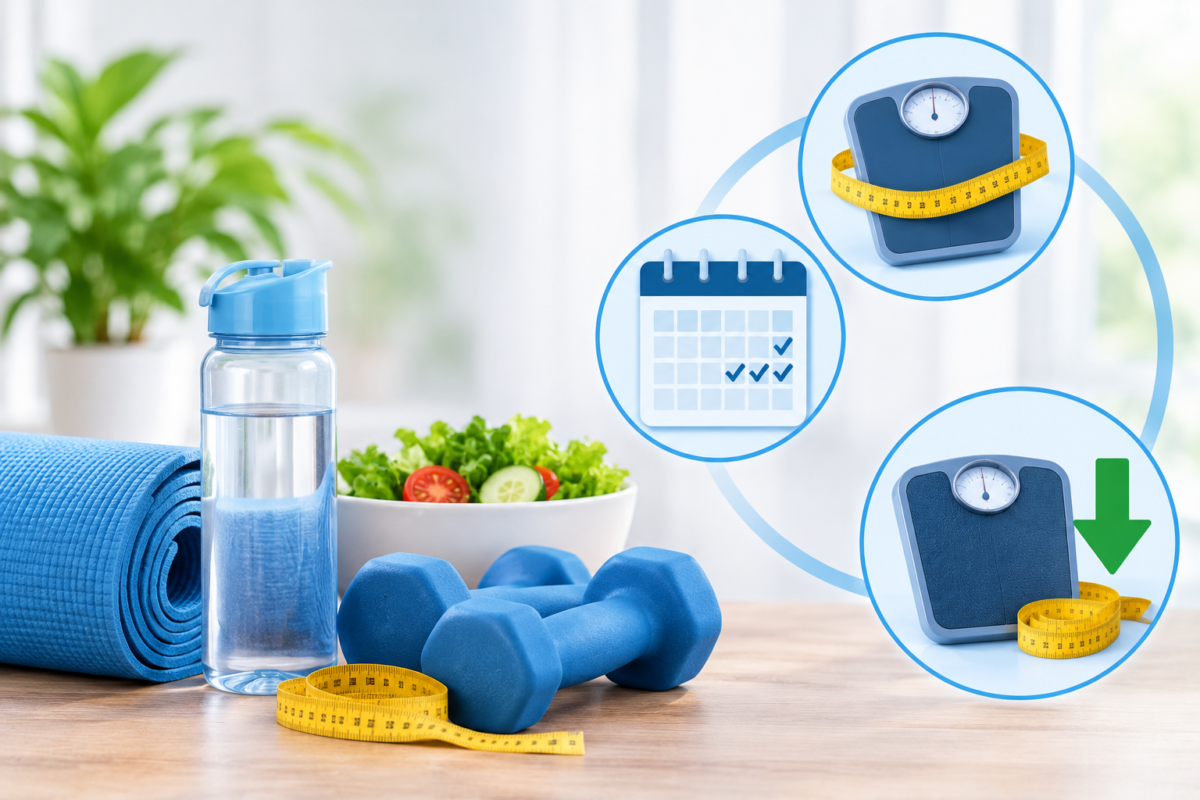

In a body composition analysis, a device estimates how your body weight divides into fat mass, fat-free mass, and body water, and that reading becomes one part of a clinical evaluation. The first scan sets a baseline. What matters after that is how later readings are timed, compared, and read alongside your labs.
Many body composition devices use bioelectrical impedance analysis, which measures the impedance to the flow of an electrical current to estimate body composition. Researchers writing in BMC Public Health describe it as convenient and non-invasive, and note that it is common in health and fitness facilities.
At SDBody, we list body composition analysis in the first step of our care framework, next to intake, diagnostics, and biomarkers. If you want the scan itself walked through, read a step-by-step look at the La Jolla scan.
This guide picks up after your first reading at the SDBody Mission Hills clinic. It covers what the number can and cannot tell you, what can shift it between scans, how often a repeat scan makes sense, and how results are read with bloodwork.
If you already have a reading and want help making sense of it, you can book a consultation and bring any recent results with you.
What does your first body composition reading tell you?
Your first reading is an estimate, taken on one device on one day. It suggests how your weight splits between fat and fat-free mass, something BMI on its own cannot show. Its main value is as a reference point, so that later readings on the same device have something to be compared against.
The Centers for Disease Control and Prevention (CDC) explains on its adult BMI page that BMI does not distinguish between fat, muscle, and bone mass. A body composition reading is an attempt to estimate that split.
Devices also disagree with each other. A study of athletic young adults in the International Journal of Exercise Science found significantly different body fat estimates between impedance devices, and its authors advised caution in using those values as absolute criteria for judging body composition.
So treat the first number as a starting line. Researchers writing in the European Journal of Clinical Nutrition in 2025 noted that when one single device is used, reliability and reproducibility matter more than research-grade accuracy, and they pointed to earlier studies showing that impedance analysis does track changes in body composition.
On a first visit, a clinician reviews your history, symptoms, and relevant results before any treatment is recommended, as we describe in what happens at your first visit.
What can shift a reading from one scan to the next?
Hydration, recent meals, recent exercise, and the time of day can all nudge an impedance reading, because the prediction equations assume proper hydration and fluid distribution. Some research also finds these effects are small. Keeping conditions similar between scans is the simplest way to make comparisons fair.
Hydration and fluid balance

That 2025 paper, archived by the National Library of Medicine, states that dehydration or overhydration can significantly affect impedance measurements, through changes in electrolyte concentration and fluid distribution.
That is why research protocols control hydration before a scan. In a 2024 reliability study of a multi-frequency device, published in Frontiers in Nutrition, participants were asked to drink water the night before and the morning of each visit, and their hydration was checked with a urine sample.
Food, exercise, and time of day
The same 2025 paper notes that food consumption and gastric emptying can affect fluid balance and impedance values. It adds that recent exercise can influence readings by altering fluid shifts and skin temperature.
In the 2024 reliability study, people were tested at the same time of day, after more than 48 hours without strenuous exercise and more than 10 hours without food. Its authors listed time of day, through circadian rhythm, as an effect that still needs more research.
How large these effects really are
The research is not one-sided. A 2021 study in BMC Public Health tested water intake, dehydration, food intake, exercise, and bladder voiding before scans, and found percent fat mass estimates were similar despite acutely violating those preparation assumptions.
The authors described the differences as within what is expected with day-to-day variation. The practical takeaway is consistency: similar conditions each time make it easier to tell a real change from normal noise.
How often should you repeat a body composition scan?
No single interval fits everyone, and we did not find a government or clinical guideline that sets one. A clinician sets the interval based on your goals, your plan, and what the scans are meant to track. Spacing matters, because small differences between readings can fall within normal day-to-day variation.
Our care framework treats repeat measurement as part of follow-up. After the first Assess step, the Optimize step is to monitor progress, review follow-up labs, and refine your plan with your clinician, and the Evolve step is ongoing follow-up as your goals and results change.
Day-to-day differences show up even under tight control. In the 2024 reliability study, between-day differences in body water and body mass were slightly higher than differences between two scans on the same day, with food, exercise, and hydration all controlled.
That is why a reading taken a few days after the last one can be hard to interpret. A trend across several scans, read with how you feel and what your labs show, gives a clinician more to work with.
Many online answers to this question come from businesses that sell scans, and the intervals they suggest vary. Treat any fixed schedule as a starting point for a conversation with your clinician.
How are body composition results read alongside your labs?
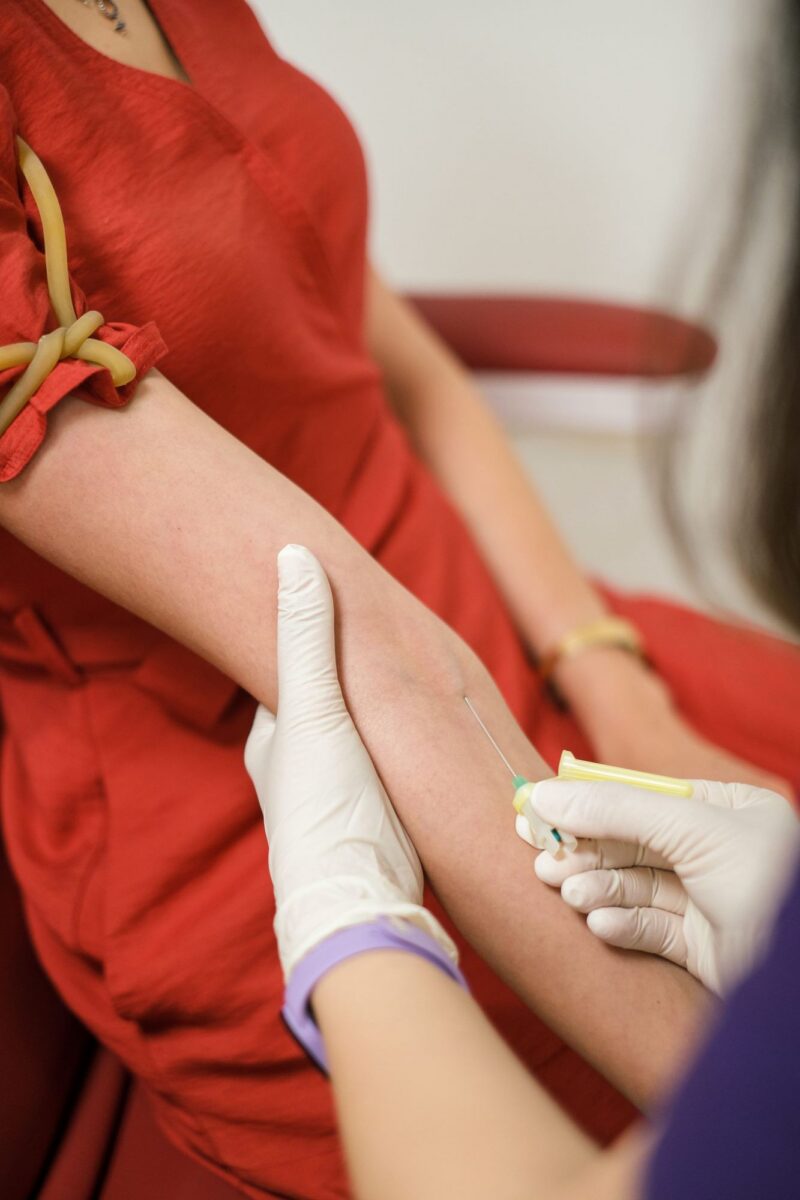
A body composition reading and a blood panel answer different questions, so a clinician reads them together. A number alone does not explain a symptom or select a treatment. Both results are inputs into a wider review that includes your symptoms, history, medications, and other clinical factors.
Different questions, one picture
A scan estimates how your weight is made up, while bloodwork looks at markers. Our three lab panels at the Mission Hills clinic are Hormone, Core, and Advanced, and depending on your goals, testing may cover hormone, thyroid, metabolic, and other markers.
Hormones are one of several factors that can affect body composition. Changes in energy, sleep, mood, body composition, and sexual health can have many causes, including changes in hormone levels, which we explain in how hormone levels change with age.
Timing matters for both
Our Mission Hills diagnostic labs page makes a point about bloodwork that mirrors the research on scans: timing changes what the result is worth. It asks patients to be hydrated and to flag an active illness, a rough night, or a heavy training session the day before, since all three can move numbers.
One input, not a verdict
A number inside a reference range is not the same as a body working the way you want it to, a point we cover in why normal labs can still leave you feeling off.
The same thinking applies to a body composition trend. Our clinicians read it next to your goals, symptoms, and labs, and if your results point toward something we do not treat, you will hear that directly.
Planning your next scan at our Mission Hills clinic
A first body composition reading is a baseline. Its value comes from comparing later readings fairly and reading them with your labs, which depends on similar conditions, a sensible interval, and a clinician who looks at the whole picture.
At SDBody, our Mission Hills clinic is on Hancock Street and open Monday to Thursday, 8 a.m. to 4 p.m., and Friday, 8 a.m. to 3 p.m. When you book, ask how to prepare so your next reading can be compared fairly with the last one.
To talk through your results or plan your next scan, call our Mission Hills clinic at (619) 772-0252.
Care is provided under physician supervision. Information on this page is general and is not medical advice. Individual results vary.
Frequently Asked Questions
What happens in a body composition analysis in Mission Hills?
A body composition device, often one using bioelectrical impedance, estimates how your body weight divides into fat mass, fat-free mass, and body water. At our Mission Hills clinic, body composition analysis is listed in the Assess step of our care framework, alongside intake, diagnostics, and biomarkers. The next step interprets labs and evaluates your goals and symptoms, so the reading is one input rather than a verdict.
How often should you get a body composition scan?
We did not find a government or clinical guideline that sets one interval for everyone, so a clinician sets the interval based on your goals and your plan. Small differences can fall within normal day-to-day variation, which makes readings taken too close together hard to interpret.
Do I need to avoid food or exercise before a body composition scan?
Research describes hydration, food, recent exercise, and time of day as factors that can affect impedance readings, although a 2021 study found the effects of breaking those preparation rules were small. The practical step is to keep conditions similar for every scan and to ask our team how to prepare when you book.
Can I compare my scan with one from a gym or another clinic?
Be cautious. A study of athletic young adults found significantly different body fat estimates between impedance devices, so readings from different machines are not directly comparable. Comparing readings from the same device, taken under similar conditions, gives a fairer picture of change.
Is a body composition scan covered by insurance?
SDBody is a direct-pay practice and does not bill insurance. We accept credit cards, debit cards, HSA, and FSA payments for eligible services. Pricing is discussed upfront, so you know the cost of your care before treatment.
Why can two body composition scans a few days apart look different?
Hydration, recent meals, recent exercise and the time of day can nudge an impedance reading, because the prediction equations assume proper hydration and fluid distribution. Some research finds these effects are small, so keeping conditions similar between scans makes comparisons fairer.
What does a body composition scan show that BMI does not?
The CDC explains that BMI does not distinguish between fat, muscle and bone mass. A body composition reading is an attempt to estimate that split, so it can suggest how your weight divides between fat and fat-free mass.