
The research that found a recovery benefit used roughly 11 to 15 minutes in cold water, in studies of physically active people, and a first session belongs well under that. For a first cold plunge the honest answer depends on the water temperature, your health history, and how your body handles the first thirty seconds.
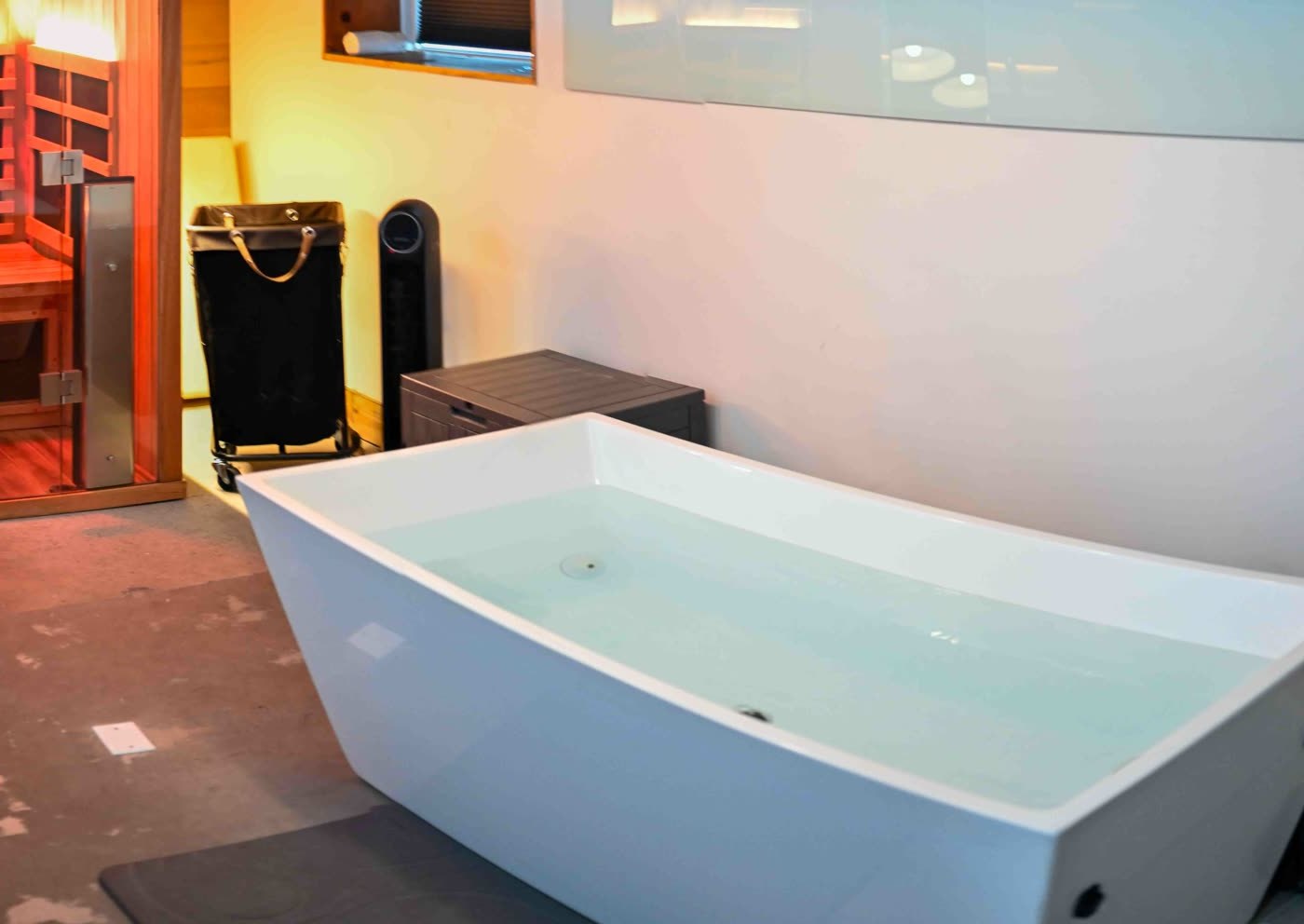
Ask three people how long to stay in a cold plunge and you will get three confident answers, usually in minutes, usually with no mention of water temperature or who is asking. SDBody runs a cold plunge inside its Mission Hills clinic, with a clinical team that screens first and sets a starting protocol, and this guide follows the order that team uses: safety, then the research, then timing.
Why the first thirty seconds are the hardest
Cold water is a load on the heart and circulation before it is anything else. A 2017 review in Experimental Physiology describes cold water as a threat or a treatment depending on circumstance, and counts cardiac arrest and hypothermia among its hazards alongside the benefits people chase.
The first moments bring the cold shock response: a reflex gasp, fast breathing, and a climb in heart rate and blood pressure. That is the part nearly everyone finds hardest, which is why SDBody’s team coaches slow breathing through the first thirty seconds and starts new patients on a conservative protocol.
When to get out
The signs below are the ones the clinical team watches for, and every one of them ends a session on the spot. None of them is a sign of weakness or a reason to push through. They are the body’s way of saying the dose was enough for today. If in doubt, get out.
- Shivering you cannot control
- Numbness in the hands or feet, or clumsy movement
- Confusion, slurred speech, or feeling faint
- Chest discomfort, or breathing that will not settle after the first minute
- Any session that feels wrong. Nothing about a plunge is a test of toughness.
Never plunge alone. At the Mission Hills clinic, staff stay reachable throughout, and the plunge sits inside a medical practice rather than an empty studio with a keypad.
Before your first session at Mission Hills
Bring swimwear and a towel, and give yourself a few extra minutes, because the clinical team goes through your health history before you start. They set a conservative starting protocol, explain how the rounds are structured, and stay reachable throughout. Most people find the second visit easier than the first, mainly because they know what the cold feels like.
New to the clinic altogether? What happens at your first visit walks through intake and the consultation, and the same screening applies to every recovery service SDBody runs, including the infrared sauna in the same room.
The clinic opens at 8am, which makes a recovery session before work realistic for downtown commuters. Cold plunge is offered at both SDBody clinics, and the La Jolla clinic runs wellness services on weekends. Full details are on the page for infrared sauna and cold plunge in Mission Hills, and the main infrared sauna and cold plunge service page covers both locations.
What the research actually used
 A 2016 systematic review and meta-analysis in Sports Medicine pooled nine randomized trials comparing cold water immersion with passive rest for muscle soreness. Cold water came out slightly ahead, and the strongest results clustered around 11 to 15 minutes in water between 11 and 15 degrees Celsius, roughly 52 to 59 Fahrenheit.
A larger 2022 review of 52 studies found that after high-intensity exercise, cold water immersion helped muscular power, soreness, a muscle-damage marker in the blood, and how recovered people felt a day later. It also found that shorter immersions and colder water tended to work better after that kind of training, and that cold water did nothing for the recovery of strength.
Two cautions come with those numbers. The participants were physically active people in supervised studies, and the outcome was recovery from hard exercise. Neither tells a first-timer how long to stay in on a Tuesday morning. That is still more evidence than most recovery tools can show, a point the clinic makes just as bluntly about what hyperbaric oxygen therapy can and cannot do.
So how long should a cold plunge last?
There is no single right number, and the clinic says so on its own page. Time depends on your experience, your health history, and what you are training for, so staff set a starting protocol at the first visit and build from there.
A fair way to think about it: the research range of around 11 to 15 minutes is the range used in some studies of physically active people, not a goal for week one. Consistency matters more than intensity. Two or three sessions a week that you actually keep may do more than one punishing session you never repeat.
Four questions people ask before a first plunge
How long should a beginner stay in a cold plunge?
Shorter than the research protocols. The SDBody team sets a conservative starting time at the first visit, based on your health history and goals, then builds from there.
What water temperature did the research use?
A 2016 meta-analysis found the strongest results for soreness between 11 and 15 degrees Celsius, roughly 52 to 59 Fahrenheit, and a 2022 review found that colder water and shorter immersions tended to work better after high-intensity exercise.
Should you cold plunge right after lifting weights?
It may not be the best timing if muscle growth is the goal. A 12-week study found smaller strength and muscle gains with routine cold water immersion after strength sessions, so you may want to leave a gap or plunge on rest days.
Who should not do a cold plunge without checking first?
Anyone with heart disease, uncontrolled blood pressure, arrhythmia, a history of fainting, a seizure disorder, Raynaud’s, cold urticaria, or a pregnancy, and anyone taking medications that affect heart rate, blood pressure, or fluid balance.
Timing it around training
If muscle growth is the goal, plunging straight after lifting may not be the best moment. In a 2015 Journal of Physiology study, men who did a ten-minute cold water immersion after every strength session for 12 weeks gained less strength and muscle than men who did active recovery, and the authors suggested routine post-exercise immersion should be reconsidered.
The practical answer from SDBody’s own page: leave a gap, or plunge on rest days, and let a clinician help you time it around your program. For soreness after a hard conditioning session, the research is kinder to cold water, and kinder than it is to most recovery tools; the clinic’s guide to what PEMF actually does draws the same line between evidence and marketing.
Who should check with a clinician first
Heat and cold both put a real load on the cardiovascular system. Talk to the clinic before a first session with heart disease, uncontrolled blood pressure, arrhythmia, a history of fainting, a seizure disorder, Raynaud’s, cold urticaria, pregnancy, or medications affecting heart rate, blood pressure, or fluid balance. Skip alcohol beforehand.
That screening is the difference between a clinic and a studio, and it is the same approach SDBody takes with every recovery service, as explained in when PEMF therapy is not the right choice.
And if the fatigue that brought you in is more than training load, bloodwork answers more than cold water, and more than a drip, as the clinic’s own look at whether IV therapy is worth it explains. Three panels are drawn on site: see diagnostic labs in Mission Hills.
The short version
- Recovery studies that found a benefit mostly used about 11 to 15 minutes in water between 11 and 15 degrees Celsius, and that range comes from studies of physically active people, not a first-session target.
- The first thirty seconds are the hardest: cold water triggers a reflex gasp and fast breathing while heart rate and blood pressure climb, so slow breathing and a conservative start matter.
- Get out at the first sign of shivering you cannot control, numbness, or confusion, and never plunge alone.
- One 12-week study found smaller strength and muscle gains when cold water immersion followed every strength session, so you may want to leave a gap or plunge on rest days.
- Heart disease, uncontrolled blood pressure, arrhythmia, a history of fainting, seizure disorders, Raynaud’s, cold urticaria, pregnancy, and some medications all call for a clinician’s review first.
If you want the cold without the guesswork, start with the screening conversation. Call the Mission Hills clinic at (619) 772-0252, or book a consult online.
Care is provided under physician supervision. Information on this page is general and is not medical advice. Individual results vary.