

Peptides are short chains of amino acids that act as signals in the body, telling cells to release a hormone, repair tissue, regulate appetite, or manage metabolism. Peptide therapy means prescribing one of these signals deliberately. What it does depends entirely on which peptide, prescribed for which problem, in which patient.
That last sentence is where most of the confusion in San Diego comes from. Search peptide therapy locally and you will find menus of compound names and stack packages, often priced before anyone has looked at a single lab value.
Very few of those pages separate the peptide medications that are FDA approved and widely prescribed from the research compounds that have never been approved for human treatment. The FDA maintains a category for bulk drug substances it has reviewed and flagged for significant safety risks, and it has said it intends to act against compounders who use them.
At SDBody, we take the opposite approach. Our practice is physician led, every peptide conversation begins with bloodwork rather than a product list, and a clinician tells you the regulatory status of anything being recommended before it is prescribed. We would rather explain why the answer is no than sell you a longer menu.
If you have been reading about peptides and want a straight assessment of whether they have any role in your plan, book a consultation and we will start where the answer actually lives, which is your labs.
What do peptides actually do inside the body?
Your body already makes hundreds of peptides. They are messengers. A peptide binds to a receptor, and that binding tells a cell to do something specific: release growth hormone, signal fullness after a meal, begin repairing connective tissue, or shift how the body handles glucose.
That is a real and well understood biological category. Some of the most significant medications in modern medicine are peptides. Insulin is one, and it has been prescribed daily for a century. Several other peptide medications are FDA approved and in routine clinical use.
The problem is that the category is so broad it stops meaning anything useful. A century-old prescription medicine and a compound that has only ever been sold for laboratory research both qualify as peptides. When a clinic advertises peptide therapy without saying which peptide and for which condition, it has told you almost nothing.
So the honest answer to what peptide therapy does is that it depends on the specific molecule and the specific problem. A peptide prescribed to support recovery is doing something entirely different from one prescribed for metabolic health, and neither will do anything useful for a patient whose real issue is untreated thyroid dysfunction.
How does a clinician decide whether a peptide belongs in your plan?
This is the part that separates a medical evaluation from a sales conversation. The decision is not made from your symptoms alone, and it is certainly not made from a menu.
Testing comes before any recommendation
Every peptide conversation at our La Jolla clinic starts with testing, because the answer often has nothing to do with peptides at all. Low testosterone, thyroid dysfunction, poor sleep, iron status and metabolic markers all produce the fatigue, stalled body composition and slow recovery that bring people to a peptide clinic in the first place.
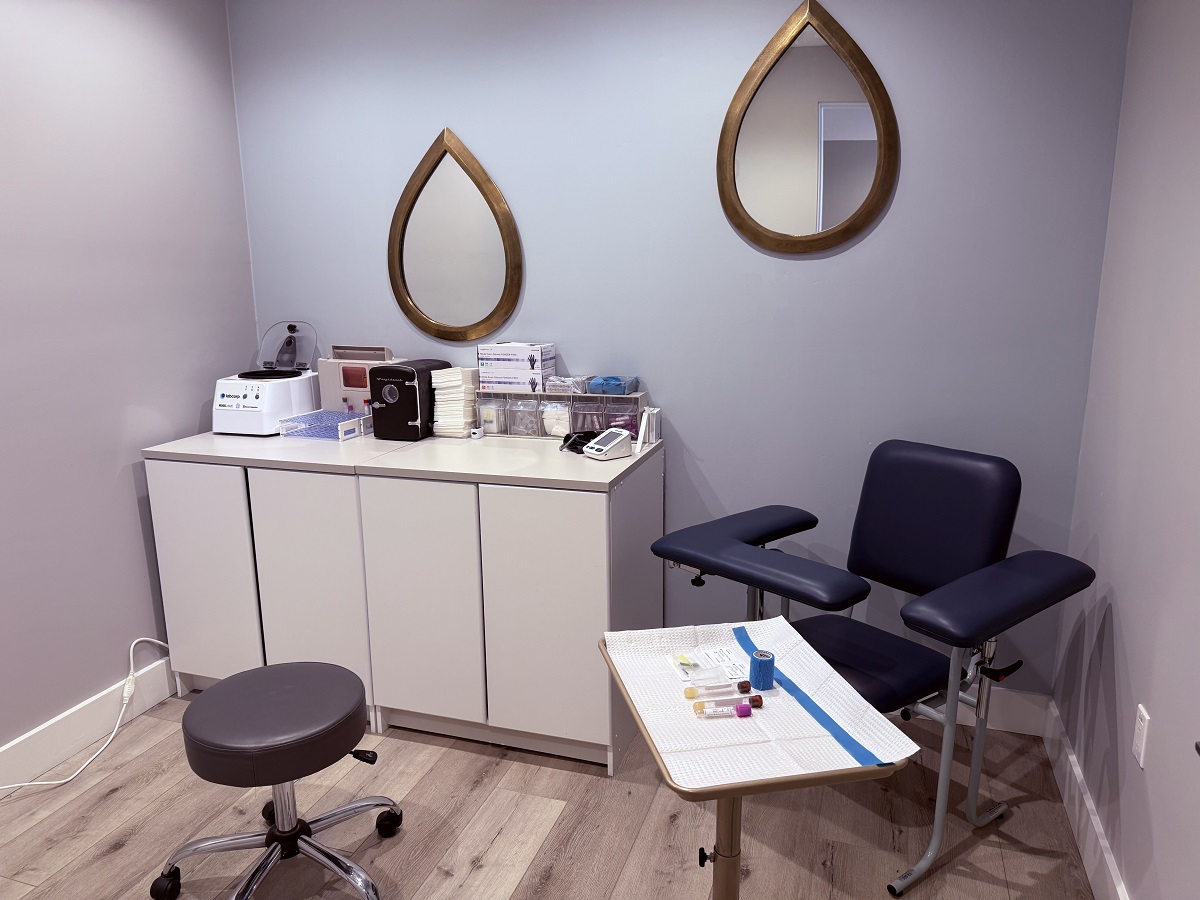
We draw three panels, Hormone, Core and Advanced, on site. They are reviewed by the clinician who will be treating you, not sent away and summarized back as a number out of range. You can see the detail on the lab panels we draw in La Jolla.
Results are read against your history, not against a reference range
A value inside the standard reference range does not mean the result is normal for you, and a value slightly outside it does not automatically mean treatment. Our clinicians read results alongside your symptoms, medical history, medications, exam findings and goals.
This matters more in peptide medicine than almost anywhere else, because the marketing is built around a promise rather than a diagnosis. The clinical question is never whether a peptide sounds appealing. It is whether anything in your results supports using one.
The regulatory status of the compound is part of the decision
A clinician evaluating a peptide has to know whether it is an approved medication, a compounded preparation, or a substance with no approved human use. That status is not a technicality. It determines what can legally be prescribed and what evidence exists behind it.
We tell patients which category a compound falls into as part of the conversation, before anything is decided. If a peptide is not appropriate or not legally available to prescribe, you will hear that, and you will be offered something that is.
Why does the FDA category of a peptide matter so much?
Several compounds advertised as peptide therapy around San Diego sit in the FDA’s Category 2 list for bulk drug substances used in compounding. That designation is not a filing detail. It means the agency evaluated the substance and identified significant safety risks, and that it is not eligible for the policy that permits other substances to be compounded.
The FDA has stated it intends to take regulatory action where compounders use Category 2 substances, including warning letters and product seizure. A clinic selling those compounds is not operating in a grey area that simply has not been clarified yet.
This is the reason our peptide page does not publish a compound menu. A list invites you to shop, and shopping is the wrong mental model for a prescription decision. It also quietly transfers the responsibility for knowing what is safe from the clinic to the patient, which is backwards.
The practical guidance we give people is simple. If a clinic hands you a stack list before it has seen your bloodwork, walk out. A menu offered ahead of a lab draw tells you which of the two conversations you are actually in.
What should you expect from a peptide consultation in La Jolla?
The visit is built to answer one question honestly, which is whether any of this applies to you.
Intake and labs on the same visit
We start with goals, history, current medications and supplements, discussed in real time rather than collected on a form. Our medical staff explain the panel options in the clinic so you can choose properly, and the draw happens on site.
A clinician reads your results with you
The consultation is where your results meet your history. You will hear what the numbers suggest, what they rule out, and where the uncertainty is. If your labs point somewhere other than peptides, that is where the conversation goes. Frequently that destination is hormone care, and testosterone therapy in La Jolla answers a different question than peptides do.
A plan you can actually evaluate
If care is appropriate, you get the plan, the alternatives, the risks and the monitoring schedule explained before anything begins. You should leave able to explain to someone else what is being recommended and why. If you cannot, the consultation has not finished doing its job.
Our La Jolla clinic sits at 7710 Fay Ave in the heart of the village, and patients reach us easily from Bird Rock, Pacific Beach, UTC, Torrey Pines and Del Mar. The full detail of what we offer is on our page for peptide therapy at our La Jolla clinic.
Where La Jolla Patients Should Start
Peptide medicine is genuinely useful in the right patient, and genuinely oversold almost everywhere else. Both of those things are true at once, and the only way to find out which side of the line you are on is to look at your own results rather than at someone’s product page.
If you have been feeling off, if your recovery has slowed, or if your body composition has stopped responding to the things that used to work, the useful next step is not choosing a compound. It is finding out what your labs say. Sometimes that conversation ends in peptide therapy. Often it ends somewhere more ordinary and more effective.
Here at SDBody, our clinicians will tell you when the answer is no, and we think that is worth more to you than a longer menu. Call our La Jolla clinic at (858) 401-2383 to book your consultation, and let us start with the bloodwork.
This article is educational and is not medical advice. Peptide medications are prescription treatments that require evaluation by a qualified clinician. Speak with your own healthcare provider about your individual circumstances before starting or stopping any treatment.
Frequently Asked Questions
What does peptide therapy do in La Jolla?
Peptide therapy means prescribing a specific peptide, a short chain of amino acids that acts as a signal in the body, to address a specific clinical problem. Depending on the compound, that signal may influence tissue repair, appetite regulation, metabolic function or hormone release. At our La Jolla clinic it is never prescribed from a menu. A clinician reviews your bloodwork and history first, explains what the evidence supports and what the regulatory status of the compound is, and often concludes that something other than a peptide is the better answer for what you are experiencing.
Are peptides FDA approved?
Some are. A number of FDA approved medications are peptides, insulin among them, and they are prescribed routinely. Many compounds marketed as peptide therapy are not approved, and some sit in an FDA category flagged for significant safety risks and excluded from the policy that allows other substances to be compounded. That distinction is one of the most important in the whole category, and advertising routinely blurs it. Your clinician will tell you which category anything under discussion falls into before it is prescribed.
Do I need bloodwork before peptide therapy?
Yes. Testing frequently changes the recommendation, and it protects you from paying for something that was never going to address your symptoms. The complaints that bring people to a peptide clinic, low energy, slow recovery, stalled body composition, are produced by a long list of ordinary and treatable causes. Until those have been looked at, any peptide recommendation is a guess wearing clinical language.
Can peptide therapy replace testosterone therapy?
They are different things and they answer different questions. If your labs show low testosterone, that is the conversation to have first, and it should be had properly rather than routed around. Peptides are sometimes discussed alongside hormone care, but treating one as a substitute for the other usually means the underlying issue has not been diagnosed. Our clinicians will tell you which question your results are actually asking.
How long does it take to know whether peptide therapy is working?
That depends on what is being treated and what outcome is being measured, which is why the monitoring schedule is part of the plan rather than an afterthought. Some effects are assessed through follow-up lab work, others through symptoms and function over a defined period. Be cautious of any clinic that promises a timeline before it has seen your results, because the honest version of that answer cannot exist yet.
Is peptide therapy safe?
Safety depends on the specific compound, the dose, your individual health status and whether you are being monitored. An FDA approved peptide medication prescribed by a clinician who has reviewed your labs is a very different proposition from an unapproved compound bought on a stack list. The compounds carrying the most safety concern are precisely the ones most heavily marketed direct to consumers, which is why we do not publish a menu.
What happens if my labs show peptides are not the right option?
You get told, and you get offered something that is. In practice this is a common outcome, and it is a good one. Testing regularly reveals a thyroid issue, a hormone deficiency, an iron problem or a metabolic pattern that explains the symptoms far better than a peptide would, and treating that directly produces a better result. Hearing no to one option is not the end of the visit.
Do you offer peptide therapy at both San Diego locations?
Yes, we run the same physician led program at our La Jolla clinic on Fay Ave and at our Mission Hills clinic, and both start with the same lab work and the same clinical evaluation. Some wellness services differ between the two sites, so if there is a specific service you want alongside your peptide consultation, ask when you book and we will tell you which location offers it.